
How Machine Learning Is Transforming Modern Agriculture — Insights by Lumestea Innovex Private Limited
How Machine Learning Is Transforming Modern Agriculture — Insights by Lumestea Innovex Private Limited
 Pushpa

Summarize with AI
Not enough time? Get the key points instantly.


When most people think of farming, they picture open fields, manual labor, and age-old traditions. While that image may have once been accurate, today’s agricultural landscape is being rapidly reshaped by cutting-edge technologies — and machine learning in agriculture sits at the heart of this transformation.
At Lumestea Innovex Private Limited, we believe that technological innovation should serve humanity’s most fundamental needs, and nothing is more fundamental than food. In this comprehensive guide, we explore how machine learning (ML) is empowering farmers and agribusinesses to work smarter, reduce waste, increase yields, and build a more sustainable future.
Whether you are a large-scale agricultural enterprise or a forward-thinking farmer, understanding how ML can benefit your operations is the first step toward embracing the future of smart farming.

What Is Machine Learning?
Machine learning is a specialized branch of artificial intelligence (AI) that enables computer systems to learn from data and improve their performance over time — without needing to be explicitly reprogrammed for every new task.
While AI and ML are often used interchangeably, they are not the same. AI is a broad umbrella term describing systems that replicate human-like thinking and decision-making. Machine learning, on the other hand, is a focused discipline within AI that is specifically centered on enabling machines to learn autonomously through experience and data patterns.
Some of the most well-known applications of ML include image recognition, voice assistants, fraud detection, recommendation engines, and natural language processing. In the context of agriculture, ML is being applied to optimize nearly every stage of the farming lifecycle — from soil preparation and planting to harvesting and distribution.
Key Benefits of Machine Learning in Agriculture
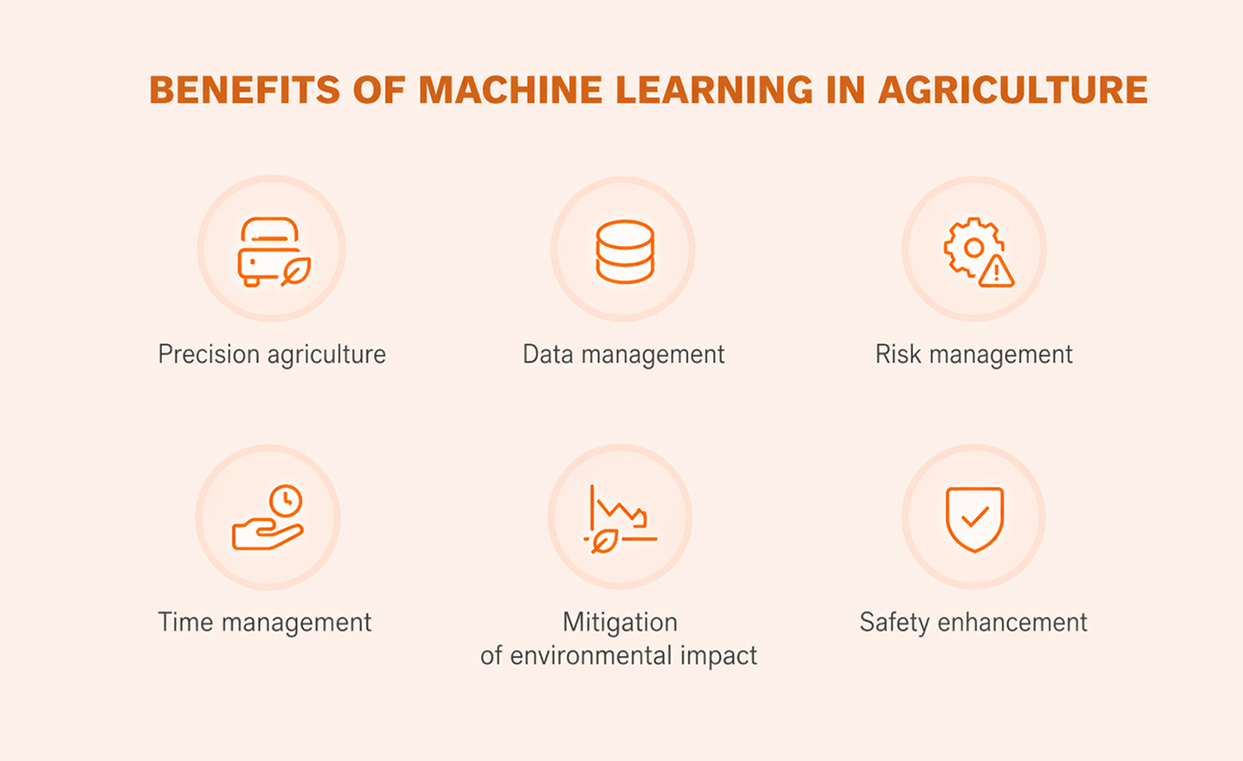
Modern farming demands real-time decisions based on massive, constantly changing data — weather patterns, market prices, soil conditions, pest activity, and much more. Machine learning provides a powerful toolkit to make sense of this complexity. Here are the primary advantages:
1. Enabling Precision Agriculture
Precision agriculture is a data-driven approach to farm management that uses ML-powered technologies to fine-tune every aspect of the growing process. By pulling insights from satellites, sensors, drones, and historical records, ML allows farmers to optimize irrigation, reduce fertilizer overuse, manage pesticide application more efficiently, and ultimately maximize crop output while keeping operational costs low.
2. Smarter Data Management
Agricultural businesses generate enormous volumes of data on a daily basis — far too much to be processed manually. Machine learning tools can automatically collect, organize, and analyze this data, turning raw numbers into actionable insights that guide better business and farming decisions.
3. Proactive Risk Management
By detecting patterns that may not be immediately visible to the human eye, ML systems can alert farmers to emerging risks — from disease outbreaks in livestock to sudden changes in weather that may threaten crops. This predictive capability helps minimize losses and gives farmers the time to take preventive action.
4. Significant Time and Cost Savings
ML-powered automation is capable of handling tasks that previously required hours of manual labor — from mapping fields and monitoring crop health to scheduling irrigation and detecting pests. The result is a dramatic reduction in operational time and financial overhead.
5. Reduced Environmental Impact
Responsible farming practices are essential to preserving our planet. Machine learning helps farmers minimize their environmental footprint by enabling precise resource usage — less water, fewer chemicals, and more strategic land management — all contributing to greener, more sustainable agriculture.
6. Enhanced Safety for Farm Workers
Many farming activities involve significant health and safety risks, including exposure to pesticides, operation of heavy machinery, and working in extreme conditions. ML-driven automation can take over these hazardous tasks, creating safer workplaces and protecting the well-being of agricultural workers.
Top ML Use Cases Revolutionizing Farming
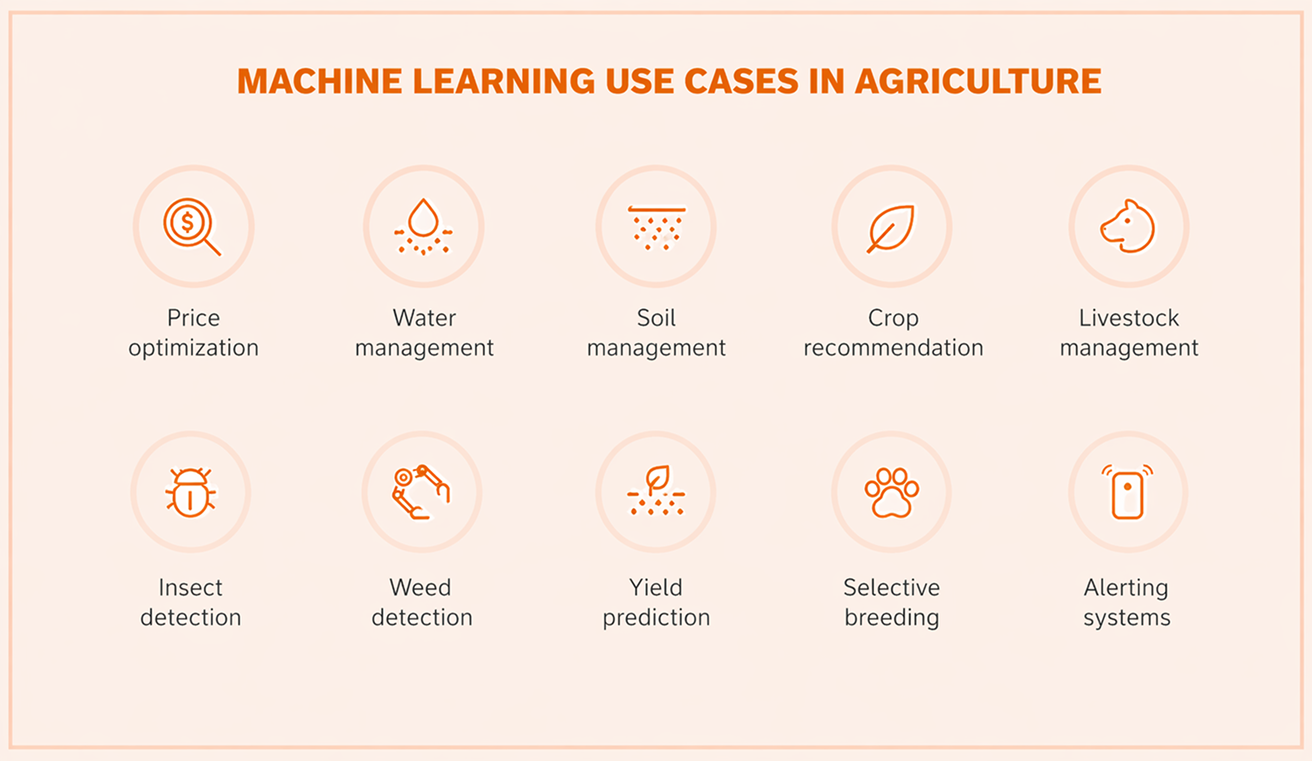
The scope of machine learning applications in agriculture is vast and continues to grow. Below are some of the most impactful use cases currently reshaping the industry:
Price Forecasting and Market Optimization
Agricultural commodity prices are influenced by a complex web of factors — climate variability, regional demand, transportation costs, and government regulations, among others. ML-based forecasting models analyze historical and real-time market data to predict price fluctuations, helping farmers and agribusinesses plan crop production cycles, manage inventory efficiently, and make more informed decisions about when and what to sell.
Intelligent Water Management
Water scarcity is a growing global challenge, and agriculture accounts for the majority of the world’s freshwater consumption. ML systems can assess soil moisture levels, local weather forecasts, and crop water requirements to deliver precise irrigation at exactly the right time and in exactly the right amounts. This smart water management approach not only conserves a vital resource but also reduces operational costs significantly. Additionally, ML can be integrated with sensor networks to identify and locate leaks within irrigation infrastructure.
Soil Health Monitoring and Optimization
Healthy soil is the foundation of a productive farm. Machine learning platforms can continuously analyze soil composition, pH balance, nutrient content, and moisture levels, then recommend customized fertilization and watering schedules. This data-driven approach to soil management reduces the risk of over-fertilization, prevents nutrient depletion, and ultimately leads to higher crop quality and yield.
Crop Recommendation Systems
Choosing the right crop for a given piece of land can make the difference between profit and loss. ML-powered crop recommendation engines evaluate soil characteristics, historical yield data, regional climate conditions, and market trends to suggest the most suitable and profitable crops for specific plots of land. This helps farmers maximize the productive potential of their land while minimizing the risk of crop failure.
Livestock Health and Activity Monitoring
In livestock farming, timely detection of illness or behavioral anomalies can prevent significant financial losses and animal suffering. Machine learning systems continuously monitor individual animals’ health indicators, feeding habits, movement patterns, and weight changes. Deviations from normal behavior trigger early alerts, allowing farmers to intervene before a problem escalates. ML also helps prevent overgrazing by analyzing herd density, pasture conditions, and environmental factors to create optimal grazing schedules.
Harmful Insect Detection and Control
Insect infestations can devastate entire harvests within days. ML-powered image recognition systems, often integrated with drones and field sensors, can identify and classify harmful insects in real time, track their spread, and recommend targeted control measures. This reduces the need for broad-spectrum pesticide application, lowering costs and minimizing harm to beneficial insects such as pollinators.
Automated Weed Detection and Management
Weeds compete with crops for nutrients, light, and water, often causing significant yield losses. Machine learning models trained on image data can distinguish between crops and weeds with remarkable accuracy, enabling robotic systems or smart sprayers to apply herbicides with surgical precision — only where they are needed. Some ML-powered systems can even deploy physical weed removal using robotics, eliminating the need for chemicals altogether in certain scenarios.
Yield Prediction and Harvest Planning
Knowing when and how much to harvest is critical for reducing post-harvest losses and improving supply chain planning. ML models use a combination of satellite imagery, weather data, soil reports, and historical yield records to generate accurate crop yield forecasts. These predictions empower farmers to plan logistics, negotiate better contracts with buyers, and schedule labor and equipment more effectively.
Selective Breeding Enhancement
Traditional selective breeding to improve crop varieties and animal genetics is a slow, resource-intensive process. Machine learning dramatically accelerates it by identifying subtle genetic and phenotypic patterns across large datasets. This enables agricultural scientists and farmers to select parent organisms with the best chance of producing offspring with desirable traits — such as disease resistance, drought tolerance, or improved nutritional content — far more efficiently than conventional methods.
Intelligent Alerting and Security Systems
Remote farms are vulnerable to trespassing, vandalism, and wildlife-related crop destruction. ML-powered surveillance systems can be deployed to monitor farm perimeters and fields in real time, distinguishing between authorized personnel, wild animals, and potential intruders. Automated alerts are sent to farm managers instantly, enabling a rapid response that protects crops, livestock, and equipment.
Challenges in Adopting ML for Agriculture
Despite the enormous potential of machine learning in agriculture, widespread adoption still faces several significant barriers:
Knowledge and Awareness Gaps: A large portion of the global farming community — particularly smallholder farmers — remains unfamiliar with ML technologies. Bridging this awareness gap through education, community outreach, and accessible digital resources is critical.
Skill Shortage: Implementing and managing ML systems requires a baseline level of technical knowledge that many farmers currently do not possess. Training programs and user-friendly platforms designed specifically for agricultural contexts are essential.
High Initial Costs: The upfront investment required for sensors, computing infrastructure, and ML software can be prohibitive for many farms, especially smaller operations. Affordable, scalable solutions are needed to democratize access.
Limited Geographic and Crop Specificity: Many existing ML models are trained on data from specific regions and crop types, limiting their applicability in other contexts. Expanding the diversity and coverage of training datasets is an ongoing challenge for the industry.
At Lumestea Innovex Private Limited, we are committed to developing and delivering ML solutions that are practical, affordable, and tailored to the realities of diverse agricultural environments around the world.
Core ML Technologies Driving Smart Farming
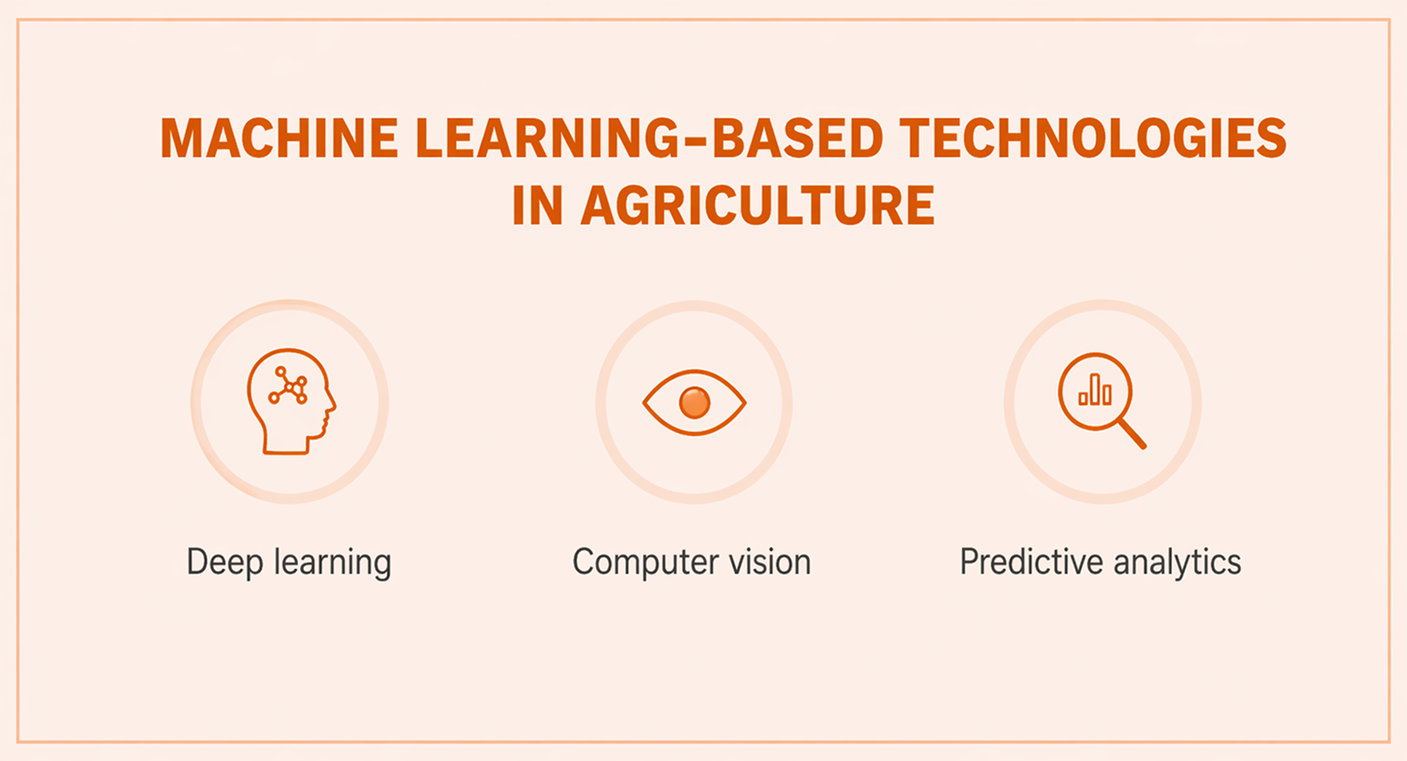
Several specialized technologies within the broader ML ecosystem are particularly important to agricultural innovation:
Deep Learning
A more advanced subset of machine learning, deep learning uses multi-layered artificial neural networks to process and interpret complex, unstructured data such as images, audio, and sensor readings. In agriculture, deep learning excels at tasks like identifying plant diseases from leaf photographs, detecting crop anomalies in aerial drone footage, classifying insects and weeds with high accuracy, and generating weather predictions from atmospheric data.
Computer Vision
Computer vision enables machines to interpret and respond to visual information in the same way human eyes and brains do — but far faster and at massive scale. In a farming context, computer vision is applied to monitor crop canopy health, identify diseased plants, count livestock, track animal behavior, assess produce quality during sorting and grading, and analyze soil surface conditions from drone or satellite imagery.
Predictive Analytics
Predictive analytics combines historical data, statistical modeling, and machine learning to forecast future outcomes with high accuracy. In agriculture, this technology can predict seasonal demand fluctuations, estimate water requirements for upcoming growing periods, project crop yield several months in advance, and anticipate the likelihood of pest or disease outbreaks based on environmental triggers. Predictive analytics gives farmers and agribusinesses the foresight needed to plan resources strategically and avoid costly surprises.
Machine Learning Algorithms Used in Agriculture
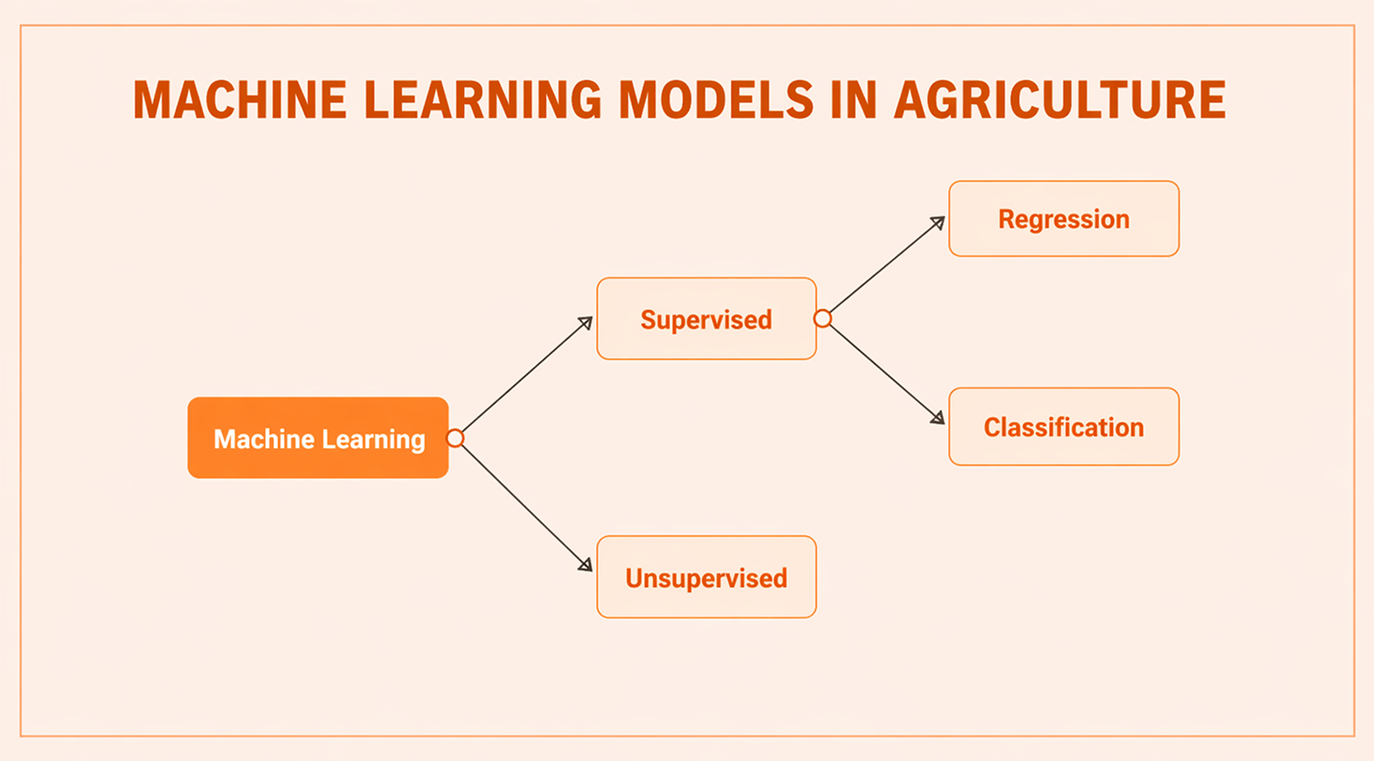
At the core of every ML system is one or more algorithms that define how the system learns and makes predictions. In agriculture, ML models are generally built using two types of approaches: supervised learning and unsupervised learning.
Supervised Learning
In supervised learning, models are trained on labeled datasets — historical examples that include both inputs and known outcomes. Within this category, two main problem types arise:
Regression Algorithms are used when the goal is to predict a continuous numerical value. For example, a regression model can forecast the expected crop yield in tonnes per hectare based on soil nutrient data, average rainfall, temperature fluctuations, and planting density.
Regression techniques are also widely used in selective breeding programs to identify which plant or animal traits are most strongly associated with desirable outcomes.
Classification Algorithms are used when the goal is to assign observations to specific categories. In smart farming, classification models are applied to distinguish healthy plants from diseased ones, categorize crops by ripeness, identify insect species captured in camera traps, or flag fields requiring immediate irrigation intervention.
Unsupervised Learning
Unsupervised learning algorithms work with unlabeled data, discovering hidden patterns and structures on their own. This approach is particularly valuable in agriculture for segmenting large fields into zones with similar soil characteristics, grouping crops with shared growth patterns, identifying unexpected environmental anomalies, and clustering livestock by behavioral profiles. Unsupervised methods complement supervised models by uncovering insights that farmers may not have thought to look for.
Conclusion
Machine learning is not merely a futuristic concept in agriculture — it is an active, rapidly evolving force that is already producing measurable results for farmers and agribusinesses around the world. From predicting crop yields and detecting diseases early to optimizing water use and automating tedious tasks, ML is making farming smarter, safer, and more sustainable.
At Lumestea Innovex Private Limited, we understand that adopting new technology can feel overwhelming, particularly in an industry as complex and deeply rooted as agriculture. That is why our team of experts is dedicated to developing practical ML solutions that align with the real needs and challenges of modern farmers.
Empower Your Farm with Smart Technology
Whether you are looking to take your first steps into precision agriculture or scale up an existing digital farming initiative, Lumestea Innovex Private Limited is your trusted technology partner. Get in touch with us today to explore how our cutting-edge machine learning solutions can help your agricultural business grow smarter.