
How to Implement a Tech Process to Avoid Tech Debt (Without Slowing Down)
How to Implement a Tech Process to Avoid Tech Debt (Without Slowing Down)
 Pushpa

Summarize with AI
Not enough time? Get the key points instantly.


Table of Contents
Why Startups Accumulate Technical Debt
The Hidden Cost of Quick Fixes
Growth Reveals the Crack: The “Star Developer” Bottleneck
The Restructure That Makes Scaling Easier
Setting the Rules of the Game: Standards That Don’t Slow You Down
Legacy Projects Need a Phased Fix (Not a Full Rewrite)
How Structured Implementation Prevents Tech Debt
The Role of Documentation in Scaling
Lumestea’s Approach: Build Fast, Build Sustainable
FAQs
Build Fast — But Build Smart
In early-stage products, speed feels like survival. Teams ship quickly, patch issues, and move forward. But when fast delivery happens without technical guardrails, tech debt quietly grows—until it becomes the reason your roadmap slows down.
At Lumestea, we help startups and scale-ups build modern digital products with practical engineering discipline—without adding heavy bureaucracy. The goal is simple: keep velocity high while improving code quality, onboarding, and long-term scalability.
Why Startups Accumulate Technical Debt
Most tech debt starts with good intentions: “We’ll clean it up later.” In reality, “later” rarely arrives. Quick fixes, inconsistent patterns, missing documentation, and rushed implementations stack up—especially when teams are sprinting to hit launches or investor milestones.
- Shipping features without shared standards
- Skipping documentation and architecture decisions
- Solving problems locally instead of systematically
- Relying on tribal knowledge instead of repeatable processes
The Hidden Cost of Quick Fixes
When tech debt increases, delivery doesn’t just get slower—it becomes unpredictable. Bugs rise, estimates become shaky, and teams start “fighting the code” instead of building the product.
Common symptoms:
- Frequent regressions and production hotfixes
- Slow onboarding (new devs take weeks to contribute)
- Only 1–2 people understand the full system (high bus factor)
- Duplicate implementations across teams
Growth Reveals the Crack: The “Star Developer” Bottleneck
Many products start with one hero developer who knows everything. That works—until it doesn’t. As the team grows, decisions funnel through one person, knowledge becomes siloed, and delivery becomes dependent on availability.
Hiring more developers doesn’t solve this by itself. What fixes it is shared context: documentation, standards, and a team structure that distributes ownership.
The Restructure That Makes Scaling Easier
The first sustainability upgrade is clear ownership. Instead of one person touching everything, move toward lightweight specialization:
- Backend specialists: business logic, APIs, data models, scalability
- Frontend engineers: UX performance, accessibility, UI consistency
- Mobile developers: platform-native performance and device capabilities
- DevOps/Platform: CI/CD, monitoring, infrastructure reliability
Setting the Rules of the Game: Standards That Don’t Slow You Down
As teams scale, “everyone codes their own way” becomes expensive. Lumestea recommends a simple baseline that every project follows:
- Formatting + linting enforced automatically
- Naming conventions and folder structure
- Reusable patterns for validation, errors, and logging
- PR templates + Definition of Done
- Code review rules (what requires 1 vs 2 approvals)
Legacy Projects Need a Phased Fix (Not a Full Rewrite)
Refactoring an older codebase in one big sprint is risky. A phased approach gives you improvements without blocking feature delivery.
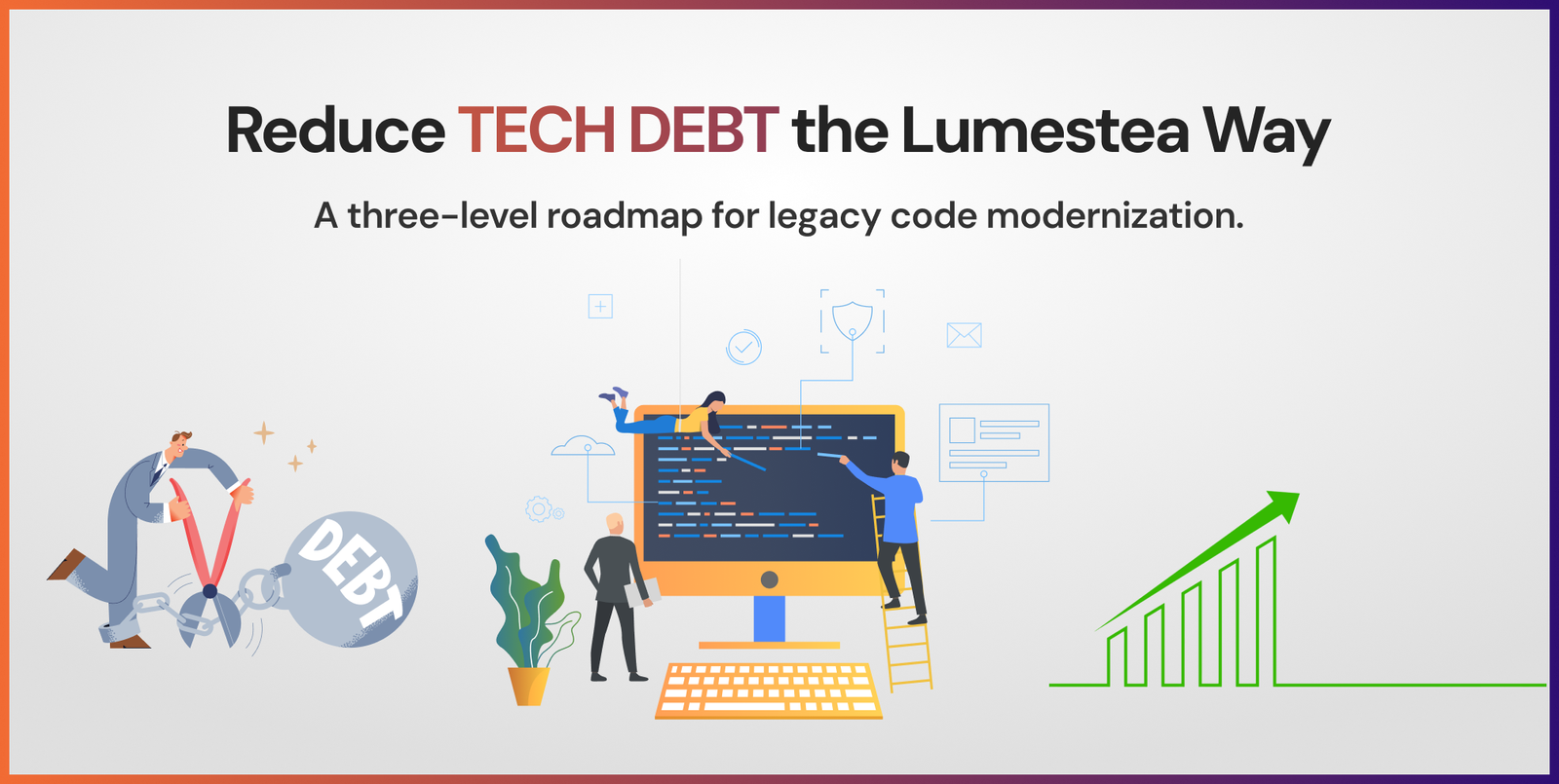
Level 1: Basic Format & Consistency
Auto-format, lint rules, and structure alignment—fast wins that improve readability immediately.
Level 2: Best Practices & Error Prevention
Standard validation, consistent error handling, logging, and baseline tests to reduce regressions.
Level 3: Architecture & Scalability
Modular boundaries, separation of concerns, performance budgets, and scalable patterns.
How Structured Implementation Prevents Tech Debt
| Focus Area | Actions Taken | Long-term Benefit |
|---|---|---|
| Formatting & Consistency | Style guide, naming, folder structure | Cleaner code, faster onboarding |
| Best Practices & Error Handling | Validation patterns, logging, safe defaults | Fewer bugs, easier maintenance |
| Scalable Architecture | Modules, separation of concerns, performance budgets | Easier scaling, lower rework risk |
| Documentation & Processes | Single source of truth (Notion/Confluence), ADRs | Shared knowledge, reduced bottlenecks |
| Team Structure & Ownership | Clear ownership + shared reviews | More velocity, fewer single points of failure |
The Role of Documentation in Scaling
Documentation sounds boring—until you onboard new engineers, revisit old decisions, or debug production. A lightweight knowledge base should cover:
- Project structure and setup
- Architecture decisions (short ADRs)
- How to implement recurring features
- Code review checklist and release process
Lumestea’s Approach: Build Fast, Build Sustainable
Preventing tech debt starts before coding. We align product goals, clarify scope, and translate requirements into delivery guardrails—so your MVP doesn’t become a rebuild later.
Our Lightweight “Scale-Up” Toolkit
- Clarity first: crisp acceptance criteria + predictable delivery structure
- Automation: linting, checks, CI/CD, and release discipline
- Gradual maturity: phased modernization for legacy code
- Team enablement: docs + patterns so new devs contribute fast
Frequently Asked Questions
1) When should a startup start worrying about tech debt?
As soon as your MVP gains traction. Growth without guardrails creates bottlenecks.
2) What are signs you’re accumulating tech debt?
Slow onboarding, repeated bugs, inconsistent implementations, and reliance on a few senior developers.
3) Do we need a formal process?
Not formal—intentional. Lightweight standards + documentation create big wins.
4) What tools help reduce tech debt?
Linters, CI/CD, code review checklists, static analysis, monitoring, and a documentation hub.
Build Fast — But Build Smart
Tech debt is easy to ignore early, but it compounds fast. The solution isn’t slowing down—it’s building with clarity, standards, automation, and shared knowledge so speed stays sustainable.
Want Lumestea to audit your product for tech debt risk?
We can review your codebase, delivery flow, and CI/CD—then propose a phased plan that improves quality without blocking your roadmap.
Schedule a consultation →
You Might Also Like
- App Scalability: What It Is and Why It Matters
- Feature Creep: How to Prevent Scope Drift