

UX Trends for 2026: Invisible Interfaces, Intentional Craft, and Business-Driven Experience
UX Trends for 2026: Invisible Interfaces, Intentional Craft, and Business-Driven Experience
 Pushpa

Summarize with AI
Not enough time? Get the key points instantly.


In 2026, “good UX” isn’t about chasing a shiny UI trend.
The real shift is quieter: products are becoming smarter, experiences are becoming less screen-dependent, and design decisions are being judged by impact, not aesthetics.
At Lumestea, we’re seeing the same pattern across SaaS, marketplaces, logistics platforms, and AI-powered tools: the winners aren’t the products with the prettiest UI—they’re the ones that feel effortless because the system is thoughtfully designed.
1) Design is becoming smarter—and less visible
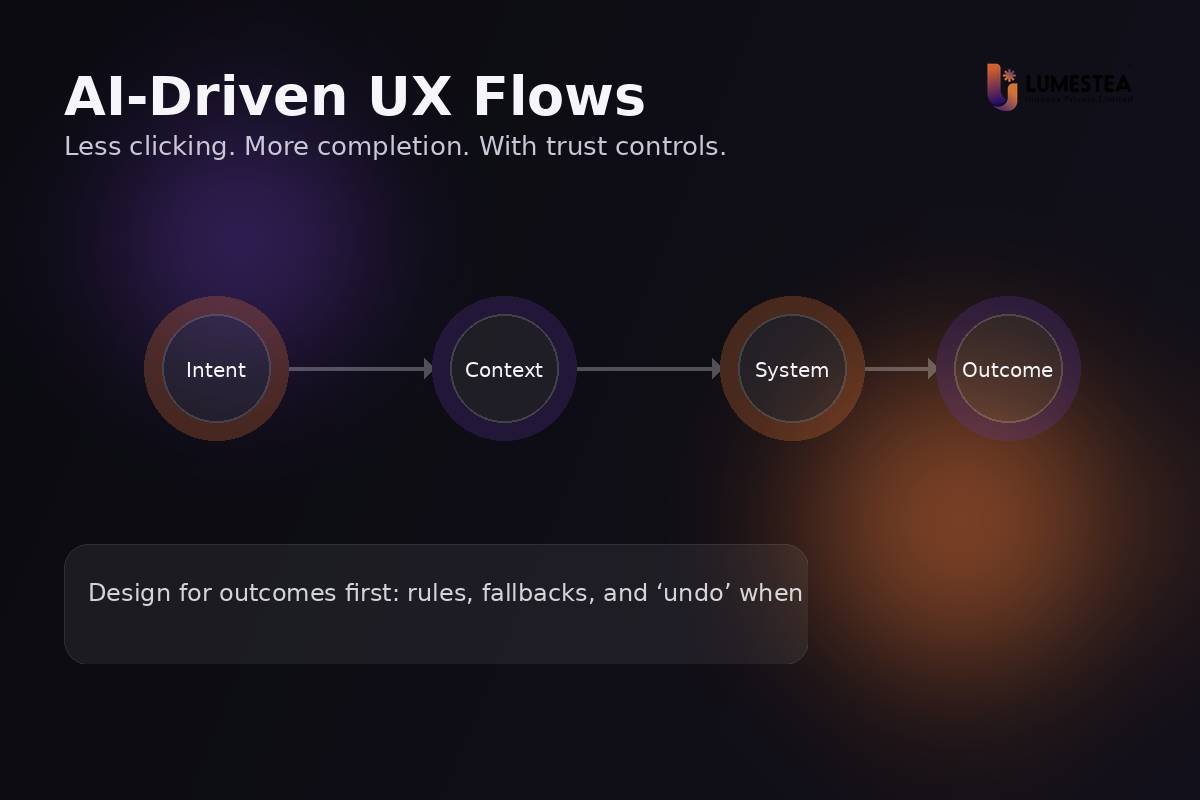
In 2026, the best experiences don’t “show off” the interface. They remove decisions, reduce steps, and adapt to context.
This is being accelerated by AI—not just in visuals, but in how products handle:
- Intent prediction (what the user is trying to do)
- Context reuse (remembering patterns and preferences)
- Flow completion (filling gaps without extra screens)
What this means for product teams
You don’t design “screens” first anymore. You design:
- outcomes
- rules
- guardrails
- fallbacks when AI is wrong
Lumestea approach: We map user intent → system response → trust and control, so AI feels helpful without being creepy or unpredictable.
2) A return to intentional design (and personality)
Over the last few years, many apps started looking the same: same components, same layouts, same neutral branding.
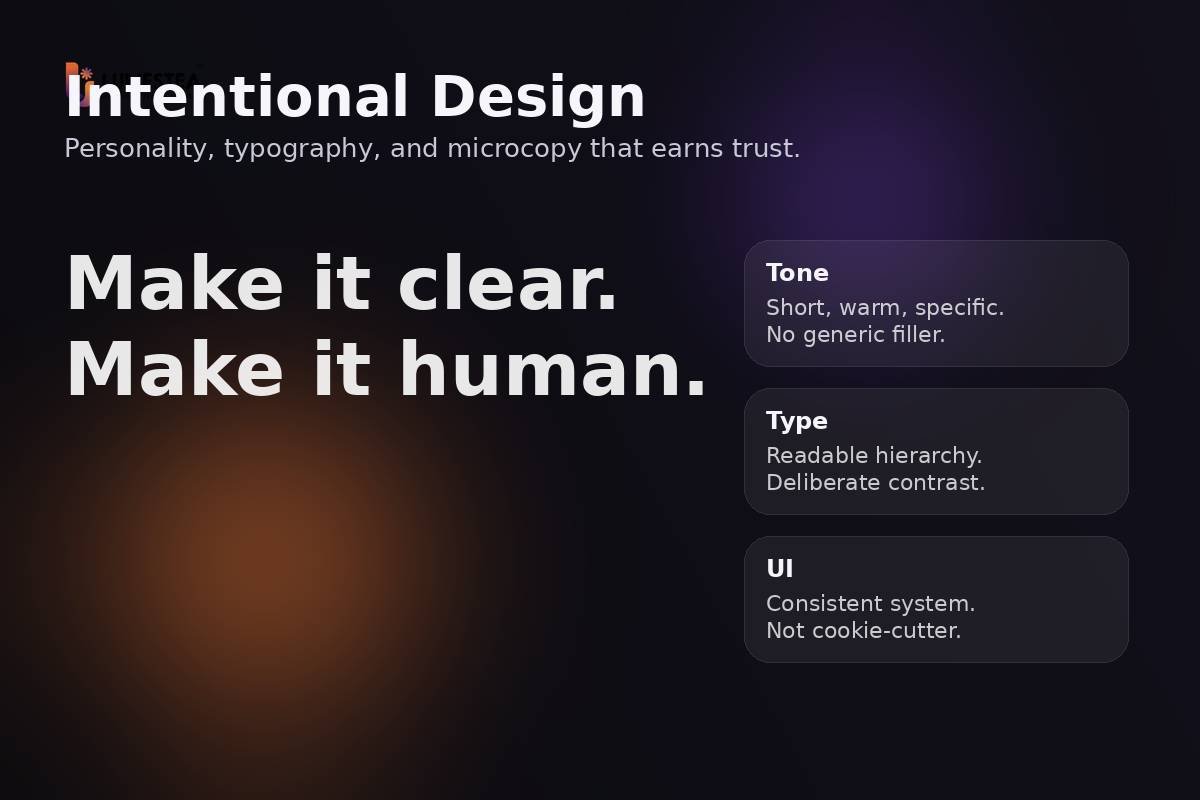
In 2026, teams are moving back to taste and intent:
- typography that carries identity
- microcopy that sounds human
- interfaces that feel specific to the product (not a template)
This doesn’t mean chaotic design. It means deliberate choices that communicate:
- who the product is for
- what it values
- what it won’t do
Practical tip: Replace “clean but empty” UI with “clear and meaningful” UI—every element should earn its place.
3) UX is moving closer to business strategy
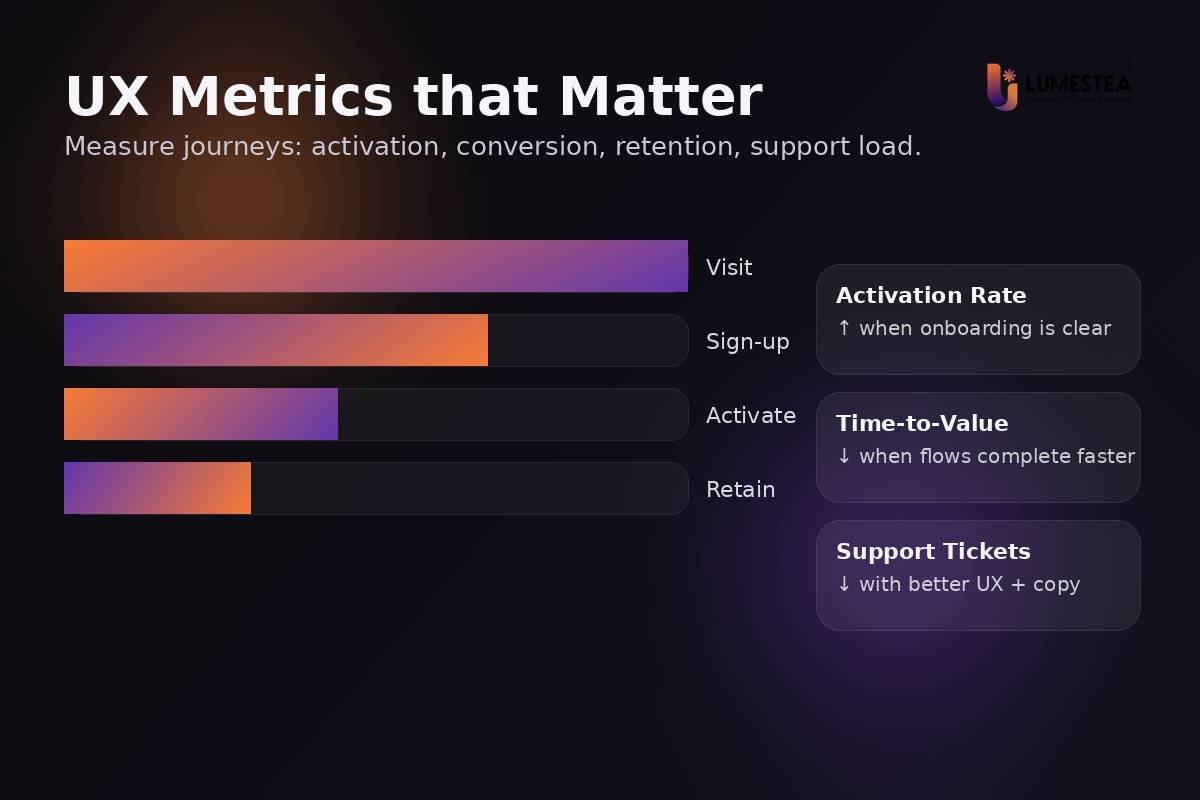
UX is no longer a finishing layer. It’s directly tied to:
- activation and onboarding
- pricing and packaging
- retention loops
- customer support load
- churn prevention
In 2026, strong UX teams speak two languages:
- user experience (friction, clarity, accessibility)
- business impact (conversion, retention, LTV, CAC payback)
Counterintuitive truth: sometimes you design friction
Not all friction is bad.
- Confirmation steps can prevent costly mistakes
- “Pause moments” can increase trust
- Clear pricing decisions can reduce refunds
Lumestea approach: We align UX to your business model—so the product feels smooth and sustainable.
4) What to focus on in 2026 (a checklist)
If you’re building or improving a product this year, prioritize:
- Clarity over cleverness: users should feel confident, not impressed
- System design over screen design: flows, states, edge cases, permissions
- Trust controls for AI: visibility, undo, edit, explain “why”
- Measurable UX: define success metrics per journey (not just “looks good”)
- Consistency at scale: design systems that support speed without sameness
Conclusion
2026 UX won’t be defined by a new UI style.
It will be defined by conscious design decisions:
- smarter systems
- intentional craft
- business-aligned experiences
If you want Lumestea to review your product UX and identify high-impact improvements (conversion, onboarding, retention), we can run a UX Audit + Action Plan and ship fixes with your dev team—or ours.
Frequently Asked Questions
1) What are the top UX trends for 2026?
Top UX trends for 2026 include invisible interfaces, AI-driven user flows, intentional design with personality, and business-led UX measured by conversion and retention impact.
2) How is AI changing UX design in 2026?
AI is shifting UX from screen-first design to flow-first design. Products predict intent, reuse context, and reduce steps—while teams add trust controls like explainability and undo.
3) What is invisible UX?
Invisible UX means the interface becomes less noticeable because the system handles complexity in the background—making the experience feel effortless and context-aware.
4) Why is intentional design important in 2026?
Intentional design helps products stand out from template-based UI. It uses deliberate typography, microcopy, and interaction choices to communicate identity and improve clarity.
5) How does UX connect to business metrics?
In 2026, UX directly impacts activation, retention, churn, and support load. Strong UX aligns user journeys with the business model and measures outcomes through defined KPIs.